
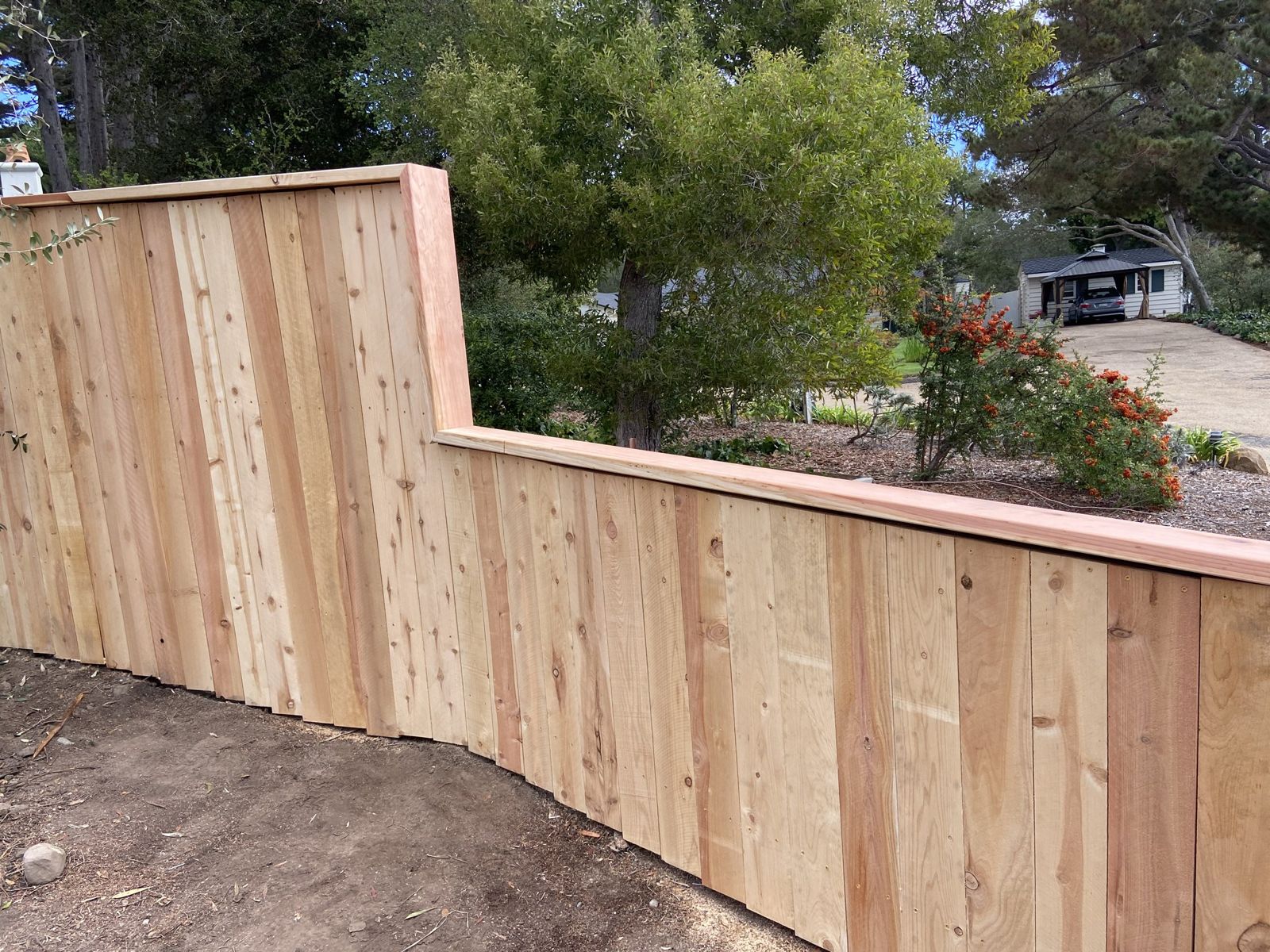
"Cedar fence" is the most common phrase in fencing — and one of the least specific. Which cedar? What grade? Those two questions decide more about how your fence looks in year ten than almost anything else, and most quotes never answer them. Ours do.
Western Red Cedar — the premium standard
The classic. Richer, deeper color; naturally rot- and insect-resistant; better dimensional stability, which means boards that stay straight and gaps that stay even. It's available in higher grades than almost any other fencing wood, which is where it really separates itself. When clients want the fence that makes neighbors slow down, this is usually the wood under the stain.
Incense Cedar — the California workhorse
Grown right here in California, Incense Cedar is the budget-smart choice — genuinely good material at a friendlier price. It's a bit less stable and comes in fewer premium grades, but properly built, sealed, and maintained, an Incense Cedar fence serves honorably for many years. Much of Santa Barbara is fenced in it.
The grade ladder — where the real money is
Within each species, boards are graded by clarity. At the top: clear and heart grades — few or no knots, cut from the rot-resistant heartwood, the longest-lived boards money can buy. In the middle: appearance grades with tight knots — handsome, sound, and sensibly priced. At the bottom: knotty and construction-common — the stuff of budget bids, where loose knots pop out, boards check and cup, and the fence ages in dog years.
Here's the part worth remembering: grade can matter more than species. A high-grade Incense Cedar fence beats a bargain-grade Western Red Cedar fence. When you compare quotes, you're not comparing "cedar to cedar" until you know the grade on each.
How we quote it
Every Lighthouse quote names the species and grade, and we bring samples so you can hold the difference in your hands. Then we protect the investment: staining and sealing can extend any cedar fence's life by up to 2x.
Planning a fence? See our residential fencing or call (805) 203-6165.
Good to know
Frequently asked questions
Which is better, Western Red Cedar or Incense Cedar?
Western Red Cedar is the premium: richer color, better dimensional stability, higher grades available, and the classic look people picture when they say 'cedar fence.' Incense Cedar is a solid, more affordable California staple that performs well when properly built and sealed. Better depends on your budget and how long you want the fence to look its best.
What do lumber grades actually mean?
Grade describes how clear the board is — how many knots, how tight, and where. Clear and heart grades have few to no knots and last dramatically longer; knotty and construction-common grades cost less but check, warp, and shed knots sooner. Two 'cedar fences' can differ by a decade of life purely on grade.
Why does grade matter more than species sometimes?
A high-grade Incense Cedar fence will outperform a low-grade Western Red Cedar one. Knots are weak points where boards crack and rot starts — fewer, tighter knots mean a longer-lived fence regardless of the label on the species.
How do I know what grade my quote includes?
Ask — and if the answer is vague, that's the answer. Our quotes name the species and the grade, and we bring samples of each so you can see exactly what you're comparing.