
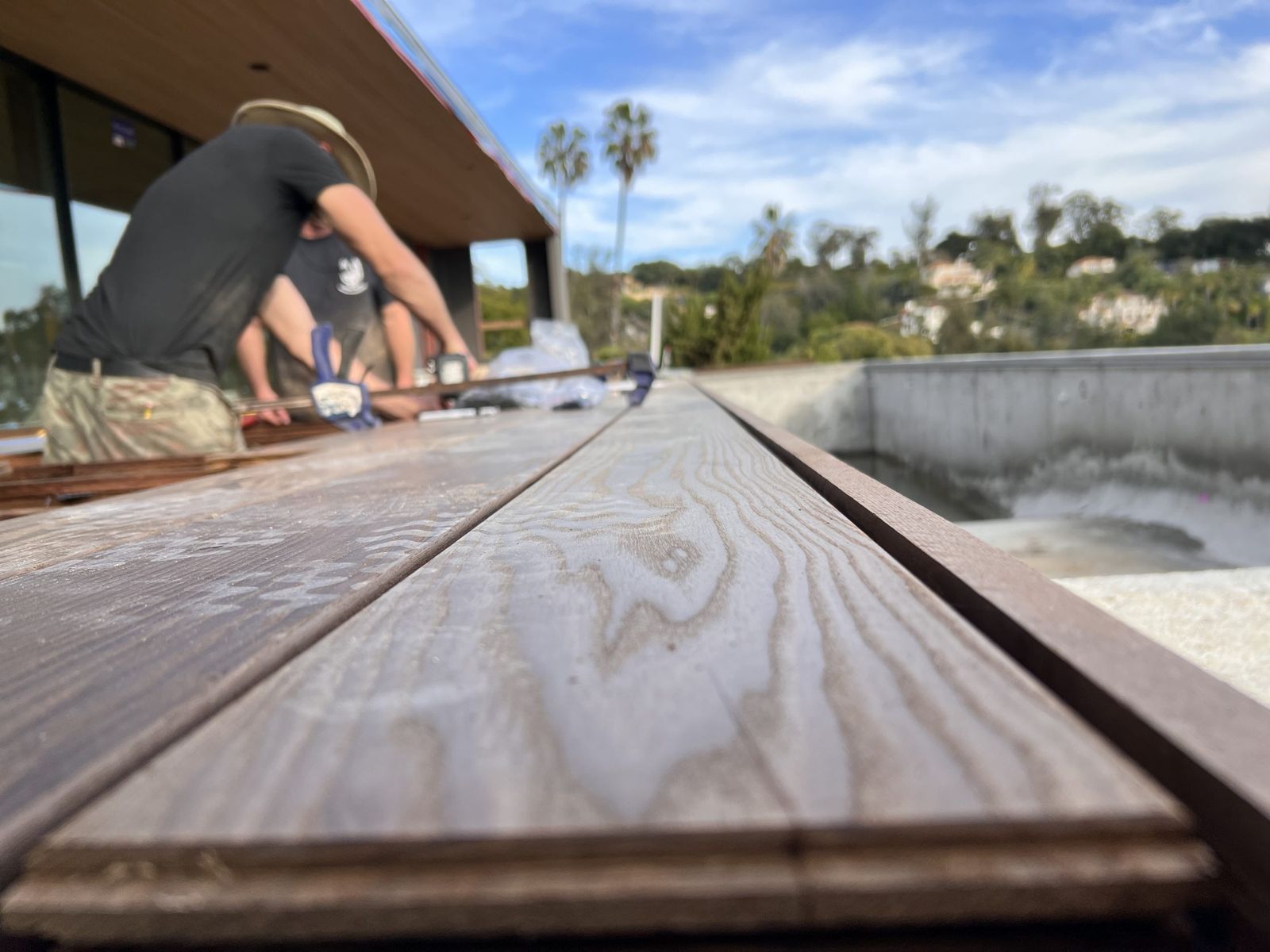
Every few decades a genuinely new material shows up in our trade. This page covers two of them — Kebony and thermally modified wood. Both start as fast-growing, sustainably certified softwood and come out the other side transformed, permanently and all the way through, into something that behaves like tropical hardwood.
Kebony
The process, developed in Norway, saturates the wood with a bio-based liquid derived from plant waste, then locks it in with heat. The cell walls thicken permanently. This isn't a coating or a pressure treatment that fades — the modification goes to the core, and so does the performance: exceptional rot resistance, far less swelling and shrinking, and hardness approaching the tropical imports. It typically carries a decades-long manufacturer warranty — rare in wood.
Thermally modified wood
A different route to the same destination: heat and steam only, no liquid or chemicals at all. The wood is cooked in a controlled kiln process — pioneered in Scandinavia and used by brands like Thermory — that permanently alters the cell structure all the way through, not just the surface. The result is dramatically better rot resistance and dimensional stability than the wood started with, plus a rich color that begins brown and silvers with age (or holds its color longer with a penetrating oil).
It comes in more species than most people expect — ash, oak, pine, a clear knot-free pine grade, hemlock, and others — each taking the heat a little differently. Thermally modified ash is the workhorse for decking: dense, strong, and rated for structural spans. Pine runs lighter and more affordable. Whatever the species, the wood goes in lighter and easier to work than a comparable hardwood, with better insulating properties underfoot too.
Kebony vs. thermally modified: which one?
Both deliver real hardwood performance from sustainably grown softwood, both skip the harsh chemicals, and both age into that same handsome silver-gray if left unoiled. The difference is process and trade-off: Kebony's liquid-plus-heat treatment tends to hold onto more of the wood's original strength and hardness, while thermal modification's higher cooking temperatures trade a bit of that strength for its own gains in stability and rot resistance. Species availability and color often end up deciding it — we'll bring samples of both to your consultation.
Where it fits
Decks, privacy fences, gates, screens, and cladding — especially modern designs where crisp, uniform boards matter. In the Ipe-vs-modified-wood conversation, budget and philosophy usually decide: Ipe for maximum density and tradition, Kebony or thermally modified wood for near-hardwood performance with a lighter footprint.
Curious? Compare the tropical hardwoods, or talk it through on site: (805) 203-6165.
Good to know
Frequently asked questions
What exactly is Kebony?
Sustainably grown softwood (typically pine) that's been permanently modified with a bio-based liquid and heat — a Norwegian-developed process that thickens the wood's cell walls. The result performs like a tropical hardwood: dramatically more stable, durable, and rot-resistant than the original wood.
How does Kebony compare to Ipe?
Ipe is still the density king. But Kebony gets remarkably close on durability and stability, comes from certified sustainable forests instead of tropical ones, works more easily (no pre-drilling every hole), and typically carries a long manufacturer warranty. For clients who want hardwood performance with a lighter footprint, it's a compelling answer.
How does Kebony age?
It starts a rich brown and weathers to a handsome silver-gray patina, like teak on a sailboat. The color change is purely cosmetic — the performance doesn't fade with the color.
Is Kebony good for fences or just decks?
Both, plus cladding and outdoor structures. We like it anywhere you want premium longevity and clean modern looks — decks, privacy fences, gates, and screens.
What is thermally modified wood?
Wood permanently altered with heat and steam alone — no chemicals, no liquid treatment. The high-heat kiln process changes the cell structure all the way through, giving it much better rot resistance and dimensional stability than the untreated wood, plus a warm color that ages to silver-gray over time.
What species does thermally modified wood come in?
Several. We most often work with thermally modified ash and pine (including a clear, knot-free pine grade), with oak, hemlock, and other species available depending on the application. Each species takes the heat differently — ash comes out denser and better suited to decking; pine runs lighter and more affordable.
Is thermally modified wood the same as Kebony?
Both are chemical-free modification processes that deliver hardwood-like performance from sustainable softwood, but the methods differ. Kebony uses a bio-based liquid plus heat; thermally modified wood uses only heat and steam. Kebony tends to retain more of the wood's original strength, while thermal modification trades a little strength for its own stability and rot-resistance gains.