
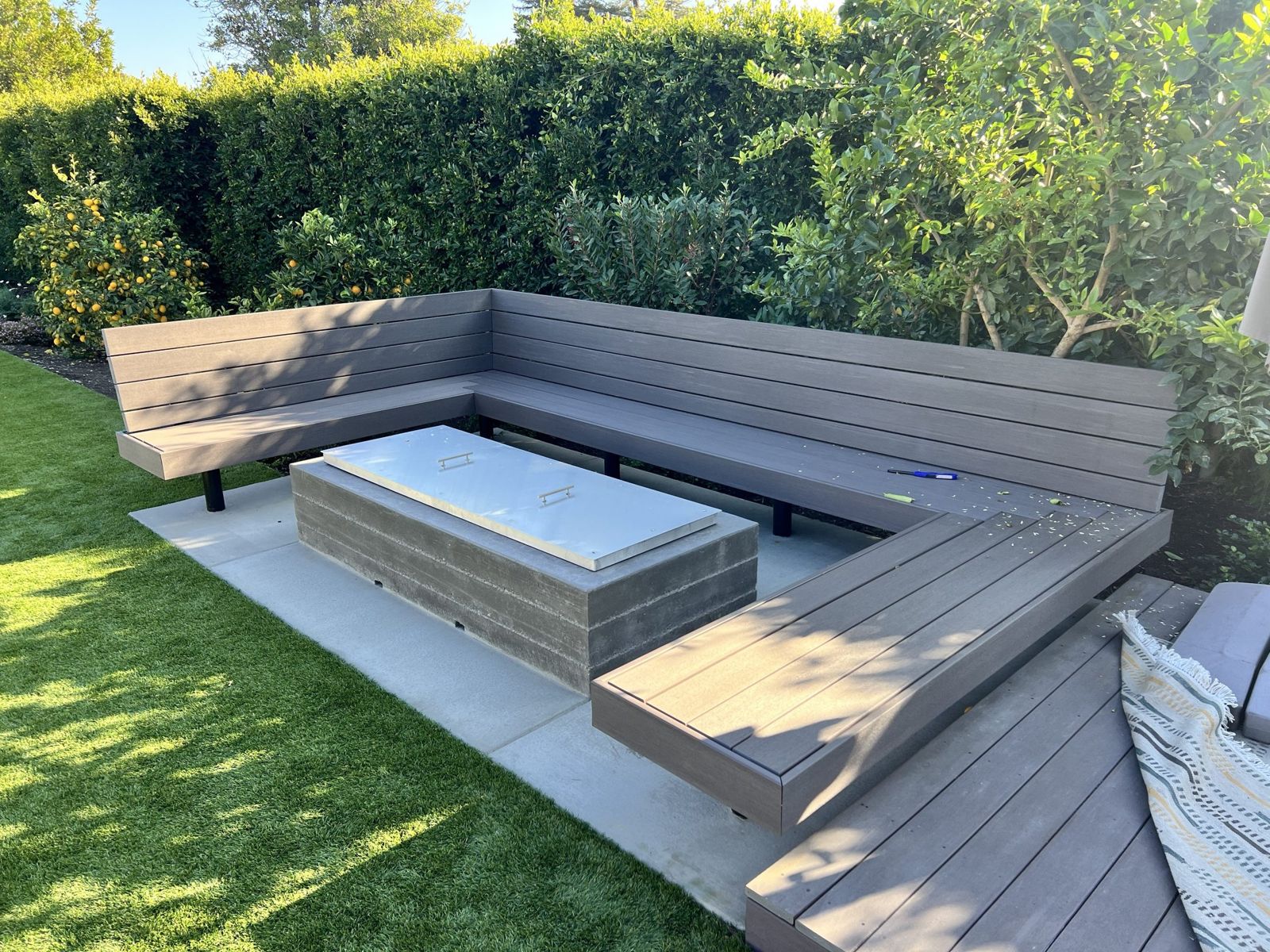
Search "Trex vs TimberTech" and you'll find a hundred affiliate articles written by people who've never carried a board. Here's the version from a crew that installs both — and is an authorized Trex Fencing installer on top of it.
Where they're the same
Both are premium capped composites: a wood-and-polymer core wrapped in a durable shell that resists fading, staining, and scratching. Both carry long warranties, both have earned their reputations, and both will still look good when a painted wood deck would be on its third refinish. At the premium tiers, both are excellent — the differences are in the details.
Where they differ
Capping and composition. The brands cap their boards differently, and TimberTech's family extends into fully polymer (PVC) boards — lighter, cooler underfoot, and especially strong poolside and in relentless sun. Looks. Color families and grain patterns are genuinely different in person — one brand's browns read warmer, the other's grays read more architectural; this is why we bring samples instead of adjectives. Lineups. Both tier from entry to premium; where the value sweet spot sits shifts by line and by year.
The fencing angle
Composite isn't just for decks. Trex Seclusions is a full composite privacy-fence system — no staining, no rot, consistent color for decades — and we're factory-authorized to install it, which matters for both build details and warranty. If you love the idea of a wood-look fence you never think about again, this is the conversation to have.
Our honest take
We match the product to the project: sun exposure, color goals, budget tier, and how the space gets used. Some projects come out Trex, some TimberTech, some hardwood after all. That's what having no horse in the race buys you.
Want to see boards side by side? (805) 203-6165 — we'll bring the samples.
Good to know
Frequently asked questions
Trex or TimberTech — which is better?
Neither, universally — which is exactly why it pays to hire a crew that installs both. Both make premium capped composite with strong warranties. They differ in capping approach, texture and color families, and how their product lines are tiered. The right answer depends on your project, sun exposure, and budget tier — not on brand loyalty.
What's the real difference between their products?
Both brands tier their lines from entry to premium. As you move up, you get fuller capping, more realistic grain, deeper color blends, and longer fade-and-stain warranties. TimberTech's family also includes fully polymer (PVC) boards, which excel in high-heat and poolside settings; Trex's strength is its deep track record and consistent availability — including Trex Seclusions, the composite fencing system we're authorized to install.
Is composite worth it over wood?
It's a trade: higher cost up front, near-zero maintenance after. No staining, no sealing, no splinters, decades of warranty. Wood costs less initially and has warmth composite can't fully match — but asks for regular care. Sun exposure, budget, and your appetite for maintenance decide it.
What does 'authorized Trex Fencing installer' mean?
Factory-backed training and warranty support for Trex's composite fencing system — not just familiarity with the catalog. It matters for warranty claims and for details like post spacing and bracket systems being done to spec.